




K J Somaiya Hospital & Medical Research Centre is empanelled under the Central Government Health Scheme (CGHS), enabling eligible Central Government employees, pensioners, and their dependent family members to access quality healthcare services at our hospital as per CGHS guidelines and approved package rates. CGHS beneficiaries can avail consultations, diagnostic services, hospitalization, surgeries, emergency care, and super-speciality treatments through our comprehensive healthcare facilities
Our dedicated help desk team is available to guide CGHS beneficiaries regarding appointments, admissions, documentation, and treatment processes.
The Mahatma Jyotiba Phule Jeevandayi Aarogya Yojana (MJPJAY) is a flagship health assurance initiative by the Government of Maharashtra, designed to ensure access to quality healthcare through cashless hospitalisation for eligible families.
Under this scheme, beneficiaries can avail treatment for 971 government-approved medical procedures, including surgeries, advanced therapies, and specialist consultations. The financial coverage extends up to ₹1,50,000 per family per year, with enhanced coverage of up to ₹2,50,000 for renal transplant procedures, ensuring critical care without financial burden.
MJPJAY benefits are available to patients who hold any one of the following valid government-issued ration cards:
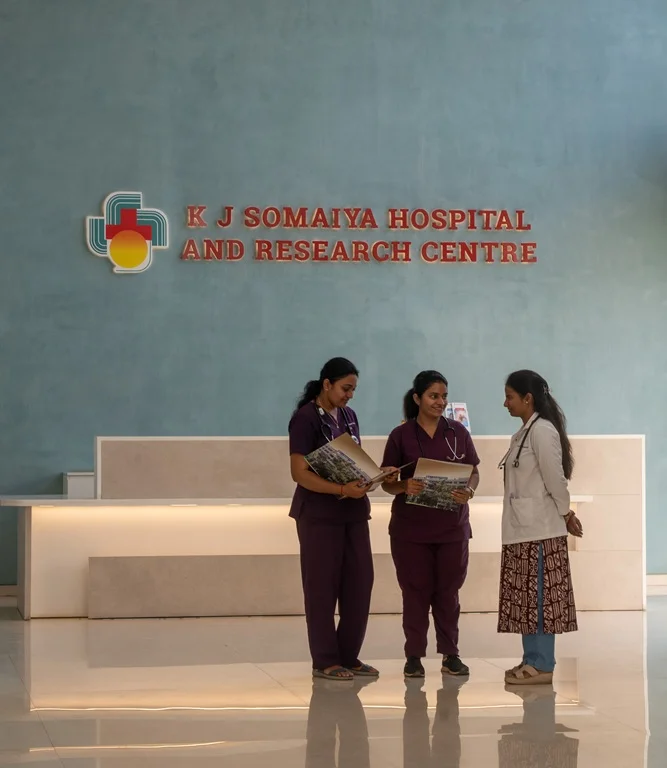
K J Somaiya Hospital & Research Centre, Mumbai, is an empanelled hospital under the MJPJAY scheme, authorised to provide cashless treatment for multiple approved procedures and therapies. Our dedicated team ensures that eligible patients receive timely medical care with complete support throughout the approval and treatment process.
To ensure a smooth and stress-free experience, trained Aarogyamitras (Medical Social Workers) are available within the hospital premises. They act as a single point of contact for patients and their families, offering end-to-end assistance under the MJPJAY scheme.

Beneficiary families approach the hospital. The Aarogyamitra stationed at the hospital assists the beneficiary.
The Aarogyamitra verifies the referral slip and a valid ration card (Yellow, Orange, Antyodaya, or Annapurna). Patient registration is completed, followed by specialist consultation, preliminary investigations, and admission formalities.
Based on the medical diagnosis, the hospital submits an e-preauthorization request to the insurer through the official MJPJAY portal.
The request is reviewed by the insurer and the MJPJAY Society:
Preauthorization approval remains valid for 7 days.
Once approved, the patient receives cashless treatment, surgery, or therapy as per the sanctioned package. All treatment and postoperative details are updated on the MJPJAY portal.
After completion of treatment, the hospital submits the required documents, including:
The insurer verifies the documents and settles the claim as per approved package rates through the MJPJAY portal.
As per scheme guidelines, patients are entitled to free follow-up consultation, investigations, and medicines for up to 10 days after discharge.
The Mahatma Jyotiba Phule Jeevandayi Aarogya Yojana (MJPJAY) is a Government of Maharashtra health assurance scheme that offers cashless hospitalisation for eligible families. The scheme is aimed at ensuring access to quality medical care without financial hardship.
Eligible beneficiaries include:
MJPJAY covers a wide range of medical services across multiple specialties, allowing patients to receive comprehensive treatment at empanelled hospitals.
The scheme includes coverage for:
To initiate treatment under MJPJAY, patients must submit specific documents for eligibility verification and registration at the hospital.
The required documents typically include:
Yes, MJPJAY provides cashless treatment for eligible procedures once preauthorization is approved by the insurer and the MJPJAY Society.
Cashless benefits include:
Yes, K J Somaiya Hospital & Research Centre offers dedicated assistance to patients availing treatment under the MJPJAY scheme to ensure a smooth and transparent process.
Support services include: